
If your team, contractors, or maintenance personnel access rooftops as part of their work, you’ve probably heard the term Mansafe system. You may already have one installed. However, one of the most common questions asked by facilities managers, building owners, and duty holders is:
“When do we actually need a Mansafe system to stay compliant?”
The answer depends on the risks present on your roof, the work being undertaken, and the control measures already in place.
In this guide, CCR Compliance explains when Mansafe systems are required, how they fit within the Work at Height Regulations 2005, and what building owners need to do to protect people and maintain compliance.
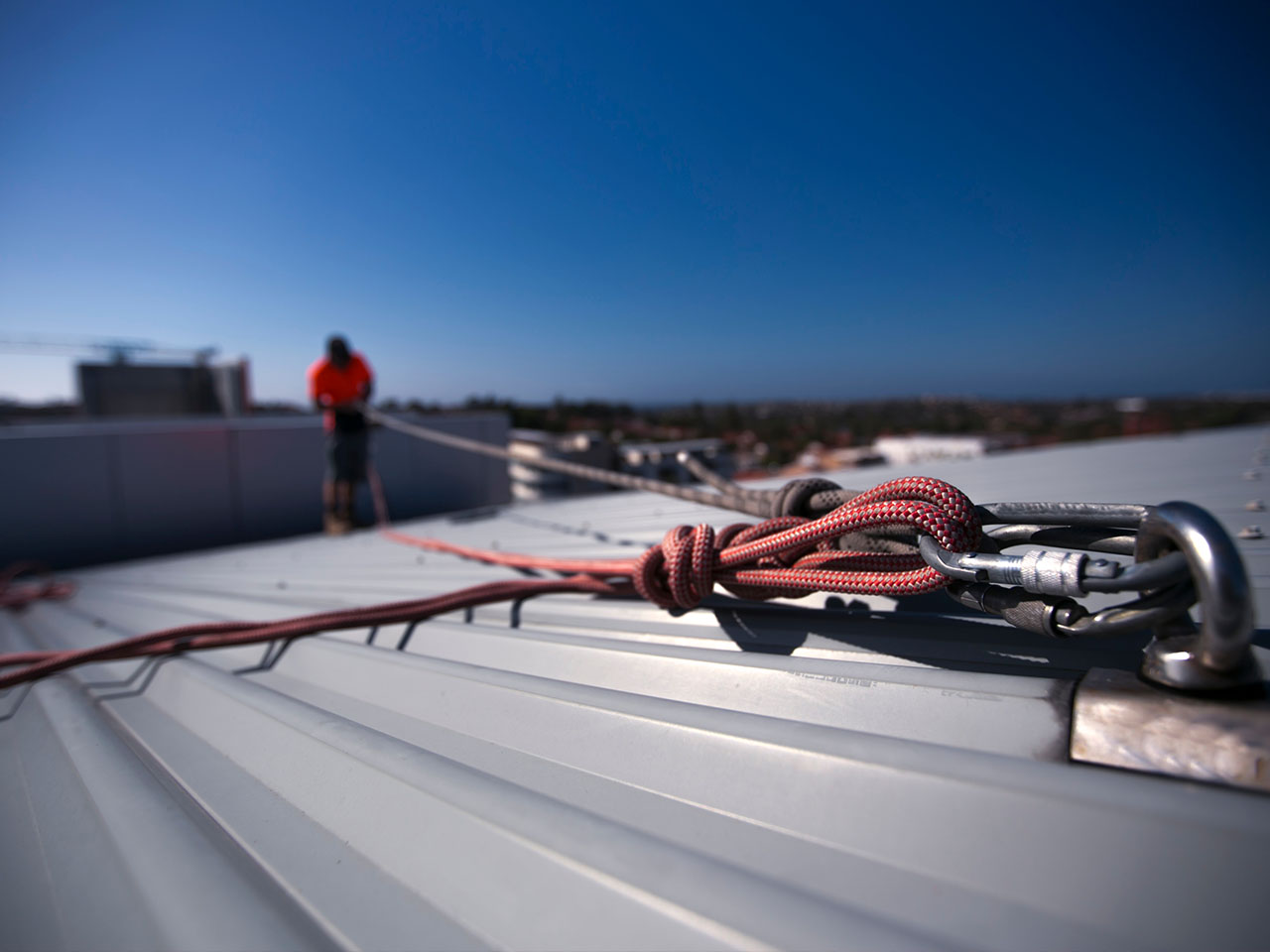
A Mansafe system is a fall protection system designed to protect individuals working at height. Typically consisting of a horizontal lifeline, anchor points, energy absorbers, and personal protective equipment (PPE), it allows operatives to remain securely connected while carrying out work on rooftops and elevated structures.
Mansafe systems are commonly installed on:
They can operate in either:
The system prevents users from physically reaching a fall hazard such as a roof edge or fragile surface.
The user can approach the hazard, but the system safely arrests the fall should one occur.
The Work at Height Regulations 2005 require employers and duty holders to:
The regulations also establish a hierarchy of protection. Collective protection measures such as guardrails and edge protection should always be considered before personal fall protection systems.
In practical terms:
This is why Mansafe systems play such an important role in modern rooftop safety strategies.
There is no single regulation stating exactly when a Mansafe system must be installed. Instead, a competent risk assessment should determine the most suitable fall protection solution.
However, there are several common situations where a Mansafe system is often required to achieve compliance.
Any maintenance, inspection, or servicing activity that requires personnel to work close to a roof edge presents a significant fall risk.
Typical examples include:
Where edge protection is not installed, a Mansafe system can provide effective restraint or fall arrest protection.
Many existing buildings were not originally designed with permanent rooftop guardrails or parapet protection.
If contractors or employees still require roof access, suitable fall protection must be provided.
Common solutions include:
Without either collective protection or a certified fall protection system, rooftop access may not be compliant.
Many roofs contain hidden hazards that significantly increase the risk of falls.
Examples include:
A Mansafe system helps keep users on safe routes while providing protection when working near these areas.
Modern buildings often contain:
In these situations, fixed walkways alone may not provide adequate protection. A Mansafe system allows users to move safely between work areas while remaining continuously protected.
Some activities cannot be completed without working directly adjacent to a fall hazard.
Examples include:
These tasks typically require a properly designed fall arrest system, supported by suitable PPE, training, and a documented rescue plan.
Installing a Mansafe system alone does not automatically make a building compliant.
A complete rooftop safety strategy should also include:
A fall protection system is only effective when supported by competent management and ongoing maintenance.
When considering rooftop safety, many building owners ask whether they should install guardrails or a Mansafe system.
For this reason, collective protection is generally preferred. However, where structural limitations, planning restrictions, or operational requirements prevent the use of guardrails, Mansafe systems provide a compliant alternative.
Many buildings ultimately benefit from a combination of both systems.
Absolutely.
A Mansafe system is safety-critical equipment and must be inspected and recertified regularly to ensure it remains safe and compliant.
Inspections typically include:
Testing is generally required annually, although more frequent inspections may be necessary depending on system usage and environmental conditions.
Failure to maintain and certify a Mansafe system could expose building owners to legal and insurance risks.
Even if a system is already installed, it may no longer meet current requirements.
Warning signs include:
If any of these apply, a compliance review is strongly recommended.
At CCR Compliance, we provide complete Mansafe system services throughout the UK, including:
As the UK’s only triple ISO accredited rooftop compliance company, we help organisations protect their people, reduce risk, and maintain full working at height compliance.
Mansafe systems become essential whenever people need to work at height and collective protection cannot adequately eliminate the risk of a fall.
If your building contains unprotected edges, fragile roof areas, complex access routes, or requires regular rooftop maintenance, a professionally designed Mansafe system could be a critical part of your compliance strategy.
If you’re unsure whether your current arrangements are compliant, contact CCR Compliance today to arrange a rooftop safety survey and speak with one of our working at height specialists.
Subscribe to our Newsletter & Event right now to be updated.