
Falls from height remain one of the leading causes of serious injury and fatalities in UK workplaces. Despite increased awareness and improved safety systems, incidents continue to occur across commercial buildings, industrial facilities, public sector estates, and construction environments every year.
As we move through 2026, the responsibility for managing work at height remains firmly with employers, building owners, facilities managers, and duty holders. Regulations have not become less stringent, and the expectation from the Health and Safety Executive (HSE) is clear — work at height must be properly planned, controlled, and managed.
This guide explains what constitutes work at height, the legal responsibilities of duty holders, and the practical steps organisations can take to ensure their buildings remain safe and compliant.
Under UK legislation, work at height is any activity where a person could fall a distance liable to cause injury.
This includes work carried out:
Common examples include rooftop maintenance, plant servicing, gutter inspections, HVAC maintenance, façade repairs, and access to rooftop equipment.
Importantly, the length of time spent carrying out the task does not reduce the risk. Even short-duration activities must be properly planned and controlled.
Yes.
The Work at Height Regulations 2005 remain the primary legislation governing work at height in the UK and continue to apply across all sectors in 2026.
The regulations require duty holders to:
HSE enforcement continues to focus heavily on failures relating to working at height, particularly where risks were foreseeable, equipment was poorly maintained, or safer alternatives were available.
Responsibility often sits with several parties across a project or property portfolio.
Duty holders may include:
These individuals or organisations are responsible for ensuring suitable control measures are in place, risks are assessed, and all safety systems remain compliant and fit for purpose.
Employers and contractors also have responsibilities to ensure workers are competent, adequately trained, and provided with suitable equipment.
The Work at Height Regulations follow a clear hierarchy of control that should guide every safety decision.
Where possible, tasks should be redesigned so access at height is no longer required.
Where work at height cannot be avoided, collective protection measures should be considered first.
Examples include:
These systems protect everyone accessing the roof and do not rely on individual actions.
Where collective protection is not practical, personal fall protection systems may be required.
These include:
Personal protection systems must be supported by training, inspections, and rescue procedures.
Every rooftop environment presents different challenges, but several hazards continue to account for the majority of incidents.
Working near roof perimeters remains one of the most significant causes of falls.
Rooflights can appear solid but often present a serious fall-through hazard if left unprotected.
Inadequate ladders, poorly designed access points, and uncontrolled roof access create unnecessary risk.
Fall protection systems that are not regularly inspected and tested may fail when needed most.
A properly designed fall protection strategy helps protect people while supporting compliance with current regulations.
Examples include:
These provide the highest level of protection because they protect everyone using the roof.
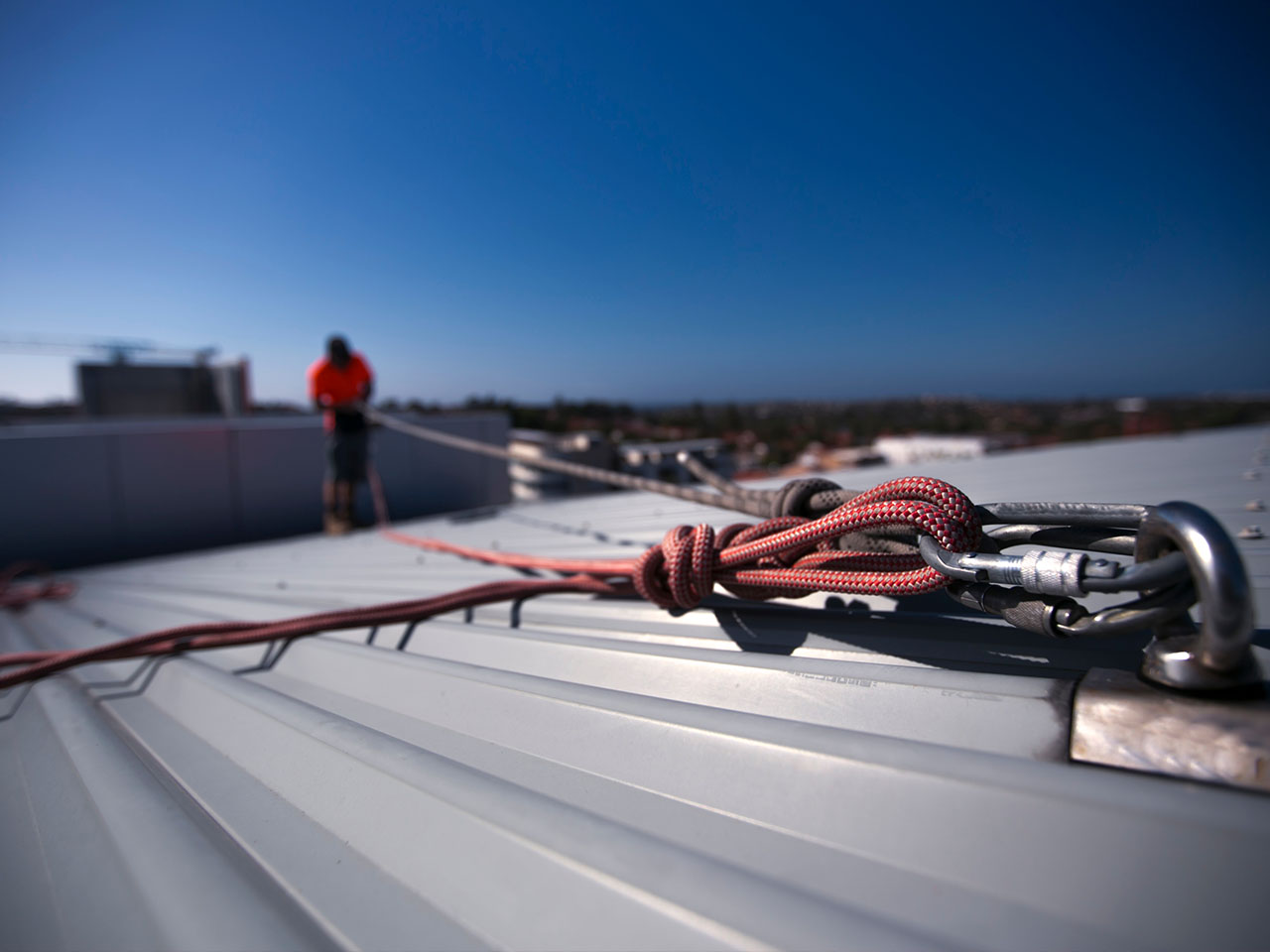
Where collective protection is not practical, systems such as Mansafe lifelines and anchor points provide critical fall protection for maintenance personnel and contractors.
These systems must always be supported by suitable PPE, user training, and rescue planning.
Many work at height incidents occur before the task even begins.
Safe access solutions may include:
Safe access should form part of every rooftop compliance strategy.
Work at height systems are not a one-time installation.
To remain compliant, safety systems require ongoing inspection and maintenance.
Typical requirements include:
Without regular inspection and certification, systems may no longer meet compliance requirements and could expose duty holders to unnecessary risk.
Training remains a critical component of compliance.
Anyone involved in:
should receive appropriate training and refresher instruction where required.
Training should cover hazard awareness, equipment use, emergency procedures, and safe working practices.
Every building owner and facilities manager should regularly ask:
If the answer to any of these questions is uncertain, a compliance review should be considered.
CCR Compliance provides nationwide rooftop safety and working at height compliance services for commercial, industrial, public sector, and heritage buildings.
Our services include:
As the UK’s only Triple ISO Accredited Rooftop Compliance Company, we help organisations protect their people, manage risk, and maintain full compliance with current regulations.
Whether you’re responsible for a single building or a national property portfolio, CCR Compliance can help you identify risks, improve safety, and ensure your rooftop access systems remain fully compliant.
Contact our team today to arrange a rooftop compliance survey and speak with one of our working at height specialists.
Subscribe to our Newsletter & Event right now to be updated.